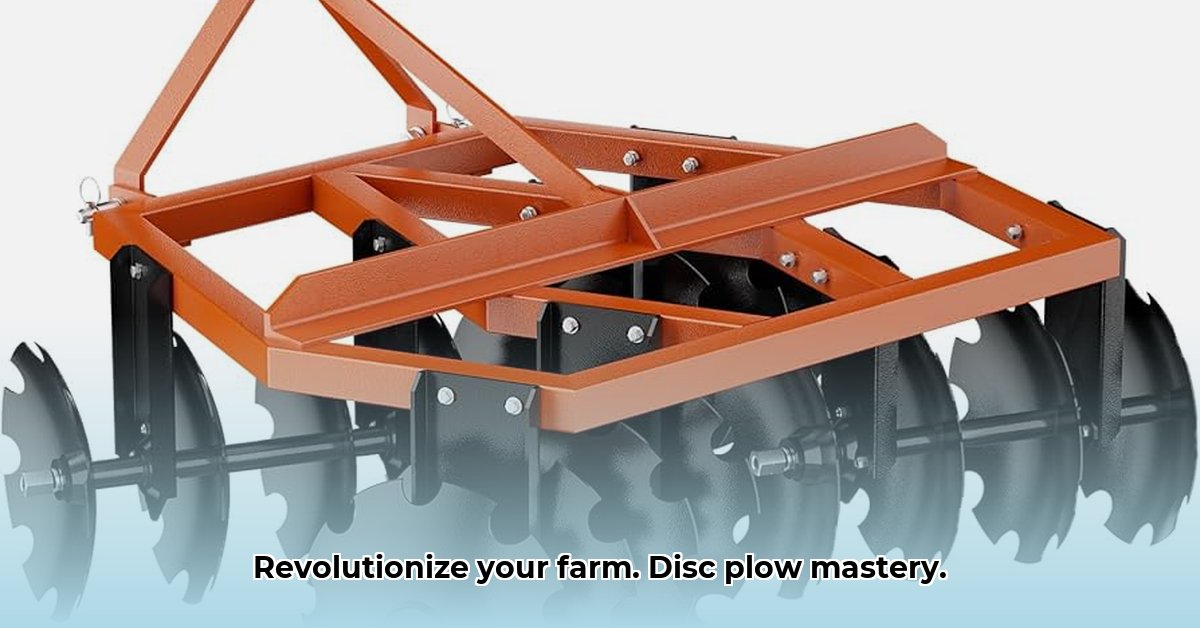
How a Tractor Disc Plow Works: Slicing and Dicing the Soil
The tractor disc plow operates on a deceptively simple principle: a series of concave (inward-curving) discs, mounted on a frame, rotate as the tractor moves forward. These discs slice and turn the soil, breaking up compacted earth, mixing soil layers, and burying weeds and crop residue. The depth of the cut, a critical factor, is adjustable, allowing for varying levels of soil disturbance. A shallow cut, similar to lightly fluffing a pillow, offers minimal disruption; a deeper cut is more like completely remaking the bed — a much more significant change. This process, called tillage, impacts multiple aspects of soil health. For a more visual guide, check out this helpful resource. Does the intensity of tillage align with your sustainable farming goals?
Types of Tractor Disc Plows: Finding the Right Fit for Your Farm
Several disc plow designs cater to specific farming needs and soil conditions. Understanding their differences is crucial for sustainable agriculture.
Tandem Disc Plows: Featuring two sets of discs, these provide deeper tillage and thorough soil mixing, ideal for breaking up heavy, compacted soil. However, this deeper tillage also leads to increased soil disturbance and potential for erosion.
Offset Disc Plows: With an off-center disc arrangement, these are excellent for working near obstacles like fences or ditches, minimizing soil compaction in those areas. This also makes them more suitable for contour plowing, reducing erosion on slopes compared to conventional plowing.
Single Disc Plows: Simpler and smaller, these are suitable for smaller farms or localized tillage, such as creating furrows or addressing compacted patches. Their lower profile reduces soil disturbance but also means slower coverage per acreage.
Selecting the optimal plow depends on soil type (clay, sandy loam, etc.), field size, and the desired level of soil disturbance. Sustainable farming often prioritizes minimal soil disruption to preserve soil structure and health.
Sustainable Applications: Tilling Smart, Not Hard
While tillage can disrupt soil structure, appropriate disc plow usage contributes to sustainable farming practices. Key sustainable applications include:
Reduced Tillage: Instead of extensive plowing, strategic, shallower tillage minimizes soil disruption, retaining soil structure and reducing erosion. This reduces fuel use, as well as carbon footprints.
Cover Crop Integration: Disc plows can incorporate cover crops, adding organic matter and nutrients to the soil, improving its overall health. The minimal tillage keeps the soil healthy.
Fuel Efficiency: Reduced tillage leads to lower fuel consumption and reduced greenhouse gas emissions because less work needs to be done.
Improved Soil Health: The goal is to create ideal planting conditions while preserving soil structure and overall health. Sustainable practices focus on long-term soil health rather than short-term gains, leading to healthier plants and a healthier environment.
The overall goal is to create an optimal planting environment while reducing the negative environmental impacts of traditional tillage. How can your specific farming practices improve the efficiency of the disc plow?
Operating and Maintaining Your Tractor Disc Plow: Keeping it Running Smoothly
Before operation, pre-operation checks are critical to safety and equipment longevity, minimizing downtime and risk.
- Inspection: Thoroughly check for damage to discs, bolts, and other components. Replace or repair any worn or damaged parts.
- Lubrication: Lubricate moving parts according to the manufacturer’s recommendations to reduce friction and wear.
- Hitch Check: Ensure the plow is securely attached to the tractor's three-point hitch. All pins and connections must be firmly tightened.
- Depth Setting: Adjust the depth wheels to control the plowing depth, varying it based on soil type and crop needs. Over-tilling can negatively impact soil health.
- Operation: Maintain a steady speed and consistent depth during operation. Monitor for any unusual vibrations or resistance.
Post-operation maintenance enhances longevity and minimizes future problems.
- Cleaning: Remove soil and debris from the discs and frame. This prevents corrosion and facilitates easier maintenance.
- Inspection: Re-check for damage following operation.
- Storage: Store your plow in a dry location to protect against rust.
Regular maintenance extends your plow’s lifespan and minimizes costly repairs. How does preventative maintenance correlate to a sustainable farming approach?
Environmental Considerations: Minimizing Your Footprint
Disc plowing, like any tillage method, impacts the environment, primarily through soil erosion and greenhouse gas emissions from tractor fuel consumption. However, responsible usage mitigates these effects:
Reduced Tillage Depth and Frequency: Minimizing plowing depth and frequency significantly reduces soil erosion and carbon emissions associated with fuel consumption.
Conservation Tillage Techniques: Integrating conservation tillage practices, such as no-till or reduced tillage, further minimizes soil disturbance and enhances carbon sequestration.
Cover Cropping: Planting cover crops before and after major crops protects soil from erosion and improves soil health.
By adopting these sustainable practices, you can minimize your farm's environmental footprint. What strategies would be most effective in your context for minimizing the environmental impact?
Advantages and Disadvantages: Weighing the Pros and Cons
To assist in informed decision-making, the following table highlights the advantages and disadvantages of using a tractor disc plow:
| Advantage | Disadvantage |
|---|---|
| Effective soil preparation | Potential for soil erosion and compaction if misused |
| Relatively low initial cost | Requires a tractor with sufficient power |
| Versatile design for various soil types | Can be more fuel-intensive than other methods if overused |
| Suitable for various soil conditions | May not be optimal for all farming systems |
The disc plow presents a valuable tool for many farms however, careful consideration of its limitations, and its proper implementation within a holistic sustainable farming strategy, is vital. Does the functionality outweigh the potential risks associated with environmentally responsible use?